At 4:47 on the first truly hot afternoon of summer, the thermostat still says 72°F. The upstairs bedrooms tell a different story. The air conditioner has been running for hours, the hallway feels warmer by the minute, and a homeowner is wondering whether the family will sleep downstairs tonight.
She does not open Facebook and write “HVAC lead.” She writes what she knows: “Our AC is running, but the upstairs will not cool. Can anyone recommend someone reliable who serves North Austin?”
In three lines, that post carries a problem, a location, a sense of timing and a request for trust. It may become a good job for the right contractor. Yet it is easy to miss because it appeared in a neighborhood conversation, not in a lead inbox.
This guide explains how a residential HVAC business can listen for those moments, qualify them carefully and respond like a useful member of the community. Facebook groups should not replace Google, referrals or a strong local reputation. They can add something those channels do not always provide: the customer's own words, while the need is still unfolding.
Google captures searches. Facebook captures conversations.
Google remains a foundation for HVAC lead generation. A complete Business Profile helps people understand where you work and what you do, while Local Services Ads can place an eligible HVAC provider in front of people actively looking for heating or air-conditioning help. Google says local visibility is shaped mainly by relevance, distance and prominence; reviews, accurate information and responsiveness all matter.
Facebook groups occupy a different moment. A homeowner may ask neighbors whether a sound is normal, compare heat pump experiences, look for a company that can visit this week or request a second opinion before choosing a replacement. Some will search Google as well. The group adds context and social trust around that search.
Why Facebook groups fit the way HVAC demand appears
HVAC demand has a distinctive shape. It is local because a technician needs to reach the property. It is seasonal because the first heat wave or hard freeze exposes systems that seemed fine a week earlier. It can be time-sensitive without being a true emergency. And it is usually described through symptoms rather than trade vocabulary.
That makes community groups useful as a demand radar. The goal is not to promote a tune-up beneath every mention of summer. It is to notice a real request, read the full conversation and decide whether your experience can help. A matched post is evidence to review, not permission to sell.
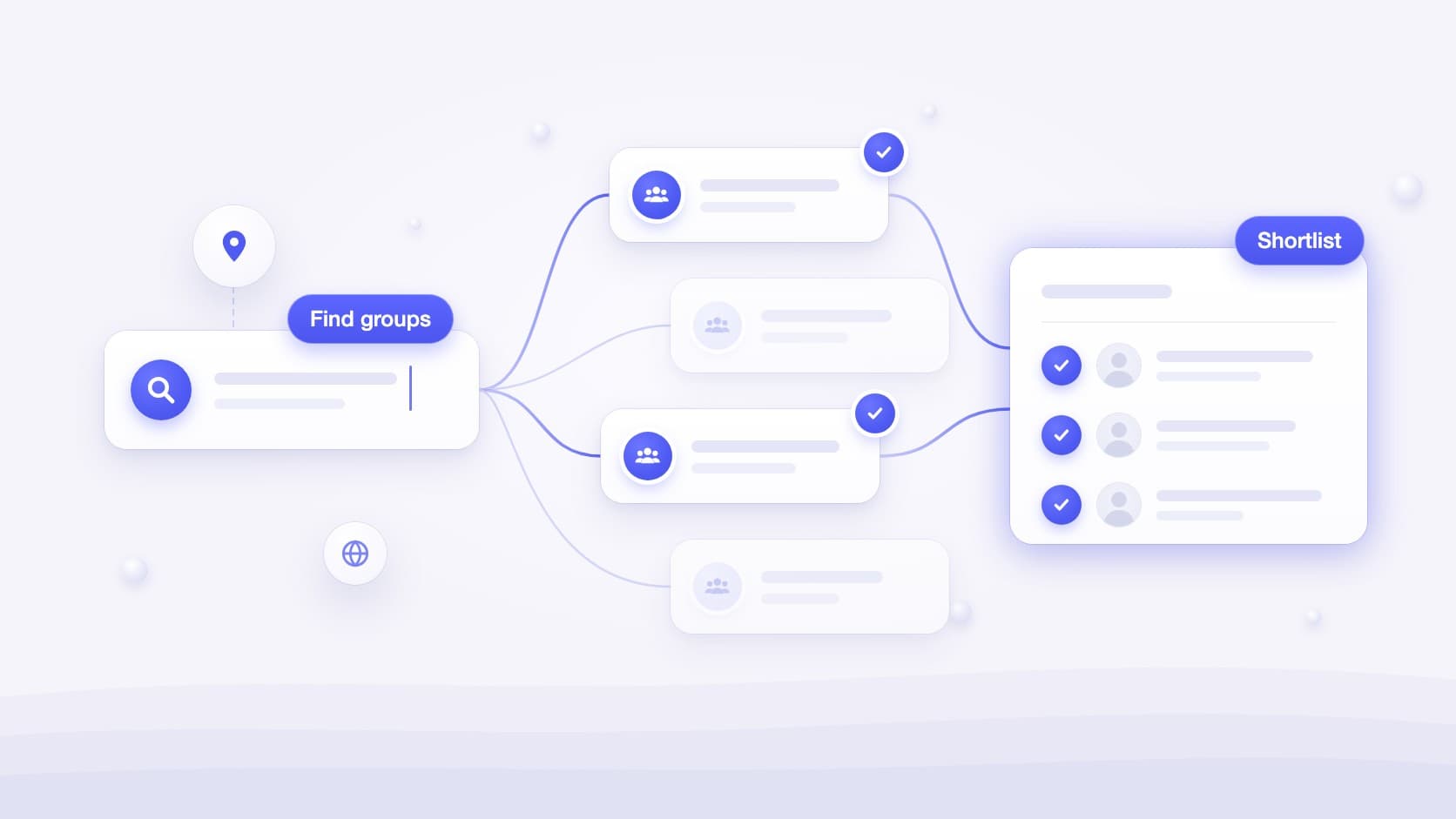
This is the HVAC version of the broader Facebook group lead-generation workflow for local services: listen for a specific need, qualify the local context, help publicly and earn the next conversation.
Choose groups with homeowners—not HVAC professionals
Industry groups can be excellent places to compare tools, discuss refrigerants and hire technicians. They are rarely where a homeowner asks who can repair the system before the weekend. For customer demand, look for communities whose membership overlaps with your service area and the people who can authorize work.
- City, county and neighborhood groups where residents exchange recommendations and local updates.
- Homeowner and HOA communities with recurring property questions.
- Local recommendation groups built specifically around trusted providers.
- Landlord, property-manager and real-estate investor groups where one relationship may involve more than one property.
- Parent, relocation and new-resident communities whose members often need a reliable local network.
Before adding a group to your workflow, ask five questions: Does its geography fit the trucks you can actually dispatch? Do relevant requests appear more than once in a season? Do the rules allow businesses to identify themselves in replies? Can you contribute credibly without posting promotions? Is the signal worth the time required to review it?
Member count is not a buying-intent score. A focused neighborhood group can be more useful than a huge regional marketplace full of jobs, used window units and out-of-area posts. Read the description, featured posts and rules before participating. If you need a starting list, the Facebook Group Finder can suggest relevant groups from a business description or website; you still decide which communities are appropriate to join and monitor.
Customers rarely say “HVAC”: build a symptom map
Contractors organize work around systems and services. Homeowners experience rooms, sounds, temperatures and bills. ENERGY STAR consumer guidance, for example, points to everyday observations such as rooms that are too hot or cold and noisy cooling equipment. Those phrases are useful because they resemble the language people use before they know what kind of visit they need.
| Signal cluster | Starter phrases | What to look for |
|---|---|---|
| Direct demand | HVAC recommendation, AC repair, furnace repair, HVAC company near me | A provider, visit or recommendation is requested explicitly. |
| Cooling symptoms | AC not cooling, upstairs too hot, warm air, AC running constantly, mini split repair | A comfort problem may require professional assessment. |
| Heating symptoms | no heat, furnace not working, cold house, heat pump not heating | The author describes lost or inadequate heat. |
| Planned project | HVAC replacement, heat pump quote, new system estimate, ductless mini split | The buyer is comparing options, scope or pricing. |
| Maintenance and comfort | AC tune-up, furnace maintenance, indoor air quality, duct cleaning recommendation | The need may be less urgent but easier to schedule. |
| Buying modifiers | recommend, available today, quote, estimate, licensed, who do you use? | These words strengthen commercial intent when paired with a relevant problem. |
| Negative signals | car AC, auto AC, job, hiring, class, course, parts, for sale, DIY, window unit | Exclude employment, training, equipment sales and unrelated meanings. |
Do not paste the whole table into one undifferentiated alert. Build small seasonal sets. A summer set might combine cooling symptoms with your towns and buying modifiers. A winter set can focus on heating. A planned-project set can run year-round for replacements, heat pumps and ductless systems.
Review ambiguity before expanding. “AC” can refer to a vehicle or a used appliance. “Furnace” can appear in a technician job post. “Heat pump” may begin a broad policy discussion with no local buyer. Negative keywords reduce obvious noise, but human review remains the final filter.
Match the signal map to the work you actually want
A useful alert is not merely related to heating or cooling; it points toward work your team is equipped and willing to perform. A repair-focused company may emphasize current symptoms, local recommendation requests and availability language. An installation team may care more about replacement estimates, recurring comfort problems, additions, renovations and homeowners comparing heat pumps with conventional systems.
Maintenance requires a different ear. Posts about preparing for summer, recently purchased homes or systems that have not been checked in years may be relevant, but they do not justify turning an informational conversation into an aggressive sales pitch. The opportunity is to answer the question well and offer a visit only when the author signals that professional help would be useful.
Property work should also reflect your operating model. If you serve landlords or property managers, include terms such as “tenant,” “rental,” “turnover” and “multiple units,” then qualify who can authorize the work. If you serve only owner-occupied residential properties, those same terms may belong in the exclusion list. A precise map protects both sides: the customer reaches a contractor suited to the job, and your dispatcher does not inherit a conversation the company was never designed to fulfill.
Configure Find Prospects Now for one HVAC territory
Begin with a territory your team can serve consistently. Monitor eight to ten well-matched groups on Plus; Pro can expand the pilot toward twelve once the first set produces useful conversations. More groups are valuable only when the results remain reviewable.
- Save the homeowner and property groups that passed your rules and geography check.
- Create separate summer, winter and planned-project keyword sets.
- Add exclusions for jobs, training, auto AC, equipment sales and distant locations.
- Describe indirect buying intent for posts that never name the trade.
- Open every promising result and read the original post and current comments.
- Respond personally only when the request is active, relevant and appropriate.
Find posts from homeowners, landlords, or property managers in [service area] who are asking for HVAC recommendations, availability, quotes, repair, maintenance, or replacement, or describing a heating or cooling problem that may need a professional. Exclude jobs, training, equipment sales, auto AC, DIY-only discussions, and posts outside [service area].
The practical difference between literal alerts and contextual classification is covered in Keyword Alerts vs AI Intent Matching. You can also review the dedicated keyword monitoring and AI matching feature guides before configuring the extension.
Qualify the opportunity before replying
A notification is not yet a lead, and a lead is not yet an appointment. Keep the terms separate so alert volume does not create false confidence.
- Match
- A post triggered a keyword or satisfied the AI criterion and needs review.
- Qualified lead
- The property, location, service, timing and commercial intent fit your business.
- Appointment
- The customer has agreed to a defined next step with your team.
Before replying, confirm the neighborhood, property type, described problem, urgency, services requested and your current capacity. Then read the comments. The author may already have booked someone, clarified that the property is outside your area or revealed that the post is only research for a future DIY project.
A disciplined “not for us” decision protects dispatch time and community trust. It also improves the next scan: record whether the miss came from the group, the phrase, the location or the intent criterion, then tune the relevant input.
Reply like a neighbor who happens to be an expert
The strongest first response is public, specific and calm. Give the author one useful way to clarify the situation, identify your commercial interest honestly and leave them in control of what happens next. Promptness is helpful; a rushed “DM me” is not.
Before anyone guesses at the repair, it helps to note whether air is moving from the upstairs vents and whether every room is affected or only part of the house. I run an HVAC company serving North Austin. If you share the neighborhood and approximate system age, I can confirm whether we cover you and check today's availability. Happy to message you if you would like.
Ask each company to put the equipment, included work, warranty, permits and any duct or electrical changes in writing; estimates are much easier to compare when the scope is visible. We install heat pumps and conventional systems in the west side service area. If you want, I can send the questions we use before scheduling an estimate.
When you compare tune-ups, ask what the visit includes and whether you will receive a written summary afterward. That avoids comparing a quick inspection with a more complete maintenance visit. I own a local HVAC service company covering Cedar Park. I can check our maintenance availability if you would like me to message you.
Adapt the structure, not just the city name. Repeating identical comments across groups makes a human response feel automated and may conflict with a community's rules. If the author invites private messages, you may continue there. Otherwise ask permission first and refer to the details they already shared so the conversation does not restart from zero.
Run a 30-day HVAC group pilot
A small pilot gives you evidence without turning Facebook into another endless feed. Keep the service area and group set stable for the month so changes in quality can be traced to the signals you adjust.
| Period | Action | Decision to make |
|---|---|---|
| Days 1–3 | Select the territory and groups; read every group's rules. | Which communities permit transparent, useful business replies? |
| Week 1 | Observe matches and label relevance without trying to answer everything. | Which phrases and groups produce real local needs? |
| Week 2 | Respond only to clearly qualified, active requests. | Which response structure earns a permissioned next step? |
| Week 3 | Tighten keywords, exclusions and the AI criterion. | Can you reduce review work without hiding valuable symptoms? |
| Week 4 | Review appointments, booked work, margin and time spent. | Should each group be retained, replaced or paused? |
Do not rewrite the configuration after every odd match. Collect patterns for several days, then make one deliberate change. That makes it possible to tell whether a new exclusion improved precision or simply hid part of the market.
Measure booked work, not notification volume
Notifications measure how much arrived for review. The business result sits farther down the funnel. A simple sheet or CRM field is enough for a first pilot.
| Metric | Question it answers |
|---|---|
| Matches reviewed | How much human review did the setup create? |
| Match precision | What share of reviewed matches were genuinely relevant? |
| Response time | How quickly did the team assess and answer active requests? |
| Permissioned conversations | How often did an author agree to continue? |
| Calls and appointments | Did the conversation produce a defined next step? |
| Quotes and booked jobs | Which groups and signals produced commercial outcomes? |
| Margin and time spent | Was the channel worthwhile after labor and delivery costs? |
| Reason lost | Was the miss caused by area, scope, capacity, timing or competition? |
Calculate match precision as relevant matches divided by all matches reviewed. For channel cost, include the monitoring subscription and the staff time spent reviewing and replying. Avoid borrowed cost-per-lead or close-rate benchmarks: season, climate, ticket size, capacity and local competition can make another contractor's number meaningless for your operation.
Attribute the opportunity to the group and signal that surfaced it, not to a copied archive of the member's post. Record only the customer information needed for an agreed follow-up, and use ordinary consent and retention practices once the conversation enters your CRM. The purpose of measurement is to improve the channel, not to build a private database of community discussions.
Privacy, safety and community boundaries
Monitor only groups and posts the Facebook account signed in to the browser can already view. Private group content remains for current members, and membership never removes the need to follow that group's participation rules. Find Prospects Now does not join inaccessible groups or make private discussions public.
A visible request is not blanket consent for commercial messaging. Facebook's own guidance identifies commercial contact without consent as spam. Help in the thread, state who you are and ask before moving the conversation to direct messages. Do not automate comments or copy personal details into unrelated systems.
For a fuller explanation of access boundaries, read How to Monitor Facebook Groups for Keywords Without Admin Access.
Frequently asked questions
Are Facebook groups good for HVAC leads?
They can be useful when a group overlaps with your service area, contains real homeowner or property-manager questions and permits transparent business participation. Treat them as a complementary demand channel, not a replacement for Google, referrals or repeat customers.
Which Facebook groups should an HVAC contractor join?
Start with city, neighborhood, homeowner, HOA, recommendation, landlord and property-management groups in places you can serve profitably. Industry and job groups may help operations or recruiting but usually contain less homeowner buying intent.
Which HVAC keywords should I monitor?
Combine direct phrases such as “AC repair” with symptom language such as “not cooling,” “upstairs too hot,” “no heat” and “furnace not working.” Add buying modifiers and exclusions for auto AC, jobs, training, equipment sales and DIY discussions.
Do I need to be a group admin?
No. Admin rights are not required to review content your account can legitimately see. You still need appropriate membership or visibility, and every group's privacy and participation rules continue to apply.
Can Find Prospects Now reply automatically?
No. It surfaces keyword and AI-intent matches for human review. It does not publish posts, write comments or send direct messages on your behalf.
Are Facebook group leads free?
They may not require media spend, but monitoring, review, thoughtful replies and follow-up all consume time. Include labor and software when you evaluate the channel against booked work and margin.
How many groups should I monitor first?
Begin with eight to ten carefully selected groups in one territory. Expand only after you know which communities and signals produce relevant, reviewable conversations.
Sources
- Google Business Profile Help: Tips to improve your local ranking — local relevance, distance, prominence, business information and reviews.
- Google Local Services Help: Getting started — HVAC eligibility, lead formats and responsiveness.
- Google Ads Help: Local Services Ads transition to Performance Max — the announced 2026 migration schedule for selected US home services.
- Facebook Help Center: Group privacy and visibility — who may see and participate in public and private groups.
- Facebook Help Center: Group rules — why each community's own rules need to be reviewed.
- Facebook Help Center: Spam and harassing messages — commercial contact without consent and unwanted messaging.
- ENERGY STAR: A Guide to Energy-Efficient Heating and Cooling — consumer-facing signs and vocabulary around heating and cooling performance.